
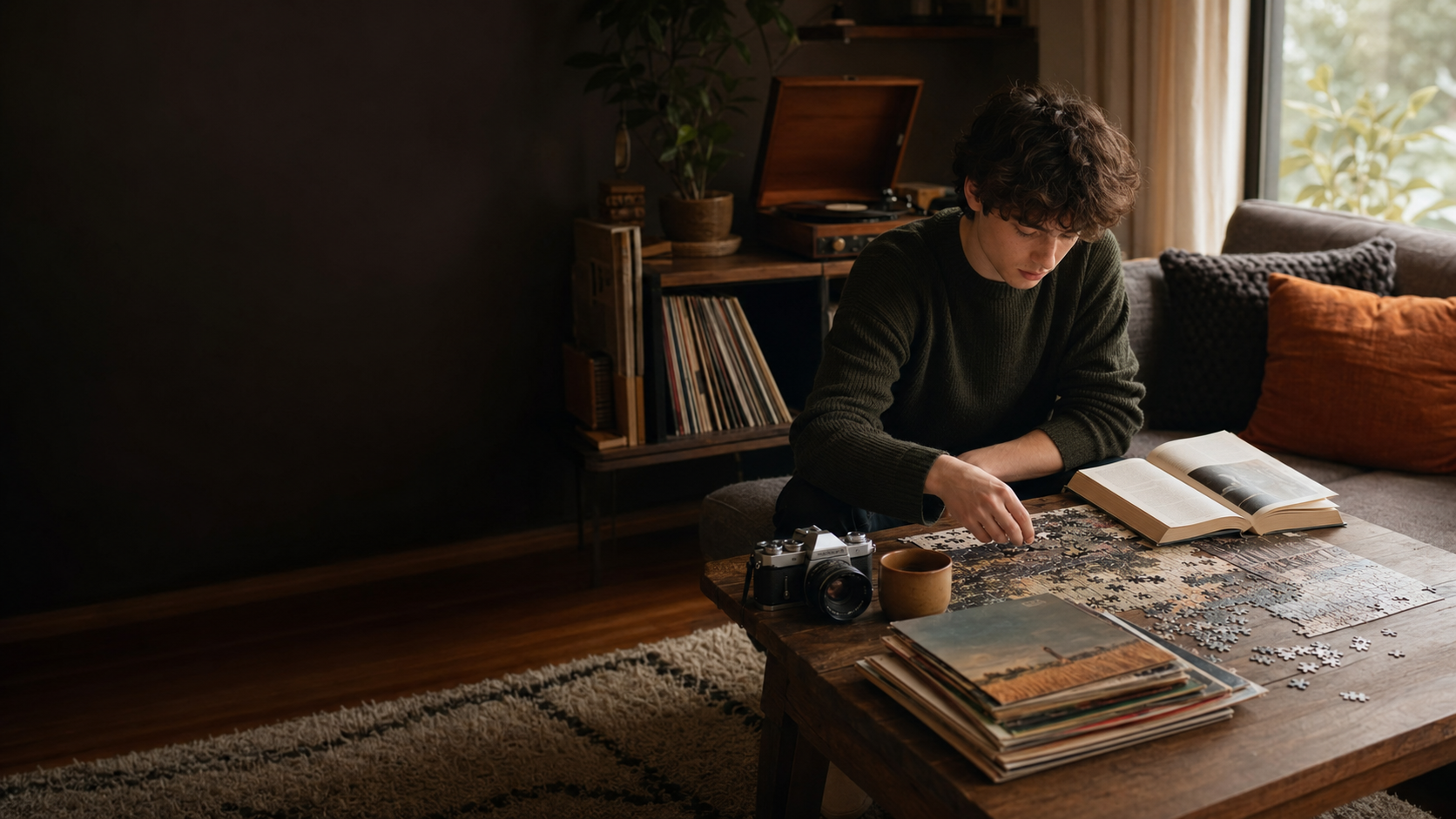
For years, new technology seemed to push older hobbies into the background. Streaming replaced record collections, phone cameras replaced film, and quick online entertainment competed with books and puzzles. Recently, however, many of these activities have started to return. Young people are buying vinyl records, using film cameras, joining book clubs, and spending evenings building puzzles or making things by hand.
One reason is that old hobbies offer a break from constant screens and notifications. Reading a printed book or taking a photo with film requires patience and attention. A puzzle cannot be completed by scrolling faster, and a vinyl record encourages the listener to experience an entire album. These activities feel slower, but that may be exactly what makes them attractive in a fast digital world.
Nostalgia and personal expression also play an important role. Physical objects can carry memories, show personality, and create a stronger sense of ownership than a digital file. Still, old hobbies are not always cheaper or more convenient. Their return may not mean that people want to reject technology. Instead, many are simply looking for a better balance between instant entertainment and experiences that require time.
Old hobbies can also create new communities. Book clubs, record fairs, photography walks, and puzzle groups give people a reason to meet and share knowledge. Beginners can learn from experienced hobbyists, while collectors can exchange stories about meaningful objects. In this way, an activity from the past can become a modern social experience. The tools may be old, but the connections people build around them are completely new.